No trip to this heaving cosmopolis is complete without visiting its most famous attractions – from the Forbidden City to the Temple of Heaven, the Summer Palace to the Great Wall – but don’t stop there. The Bird’s Nest Stadium and Ming Dynasty Tombs may be spectacular, but Beijing is a city of many faces – old and new, earthly and divine – so why not get to know them all?
***
Breakfast
No matter where you’re staying, you’re never more than a few minutes’ walk from the best breakfast in Beijing. Take an early-morning stroll around the block and make a beeline for the first street-food stall you see (if there’s a metal barrel heating a huge pan of bubbling oil, you’re onto a winner). It’s well worth trying whatever’s on offer, but your go-to should be youtiao, fluffy sticks of dough fried in oil and lightly salted, or delicious jianbing, crêpe batter and egg yolk spread thin on a stove-top and cooked until crispy, then heaped with extras – scallions, hoisin sauce, chilli, bacon, lettuce, youtiao; the options are endless. Good jianbing is still hard to find outside east Asia, so it’s worth eating as many as you can get your hands on while you’re there.
Spot of culture: Not exactly off the beaten track, but a trip to Mao’s mausoleum can easily be a unique and bizarre highlight which so often slips below the radar of foreign visitors, overshadowed by the inevitable parade of temples and tours. But the intriguing sight of China’s revered Chairman Mao, yearly re-embalmed (like Lenin and Ho Chi Minh), glowing waxy-orange through the walls of his crystal coffin, is only half the appeal. If it’s an understanding of the Chinese psyche that you’re after, you’d be hard pressed to find a more illuminating portrait than the thousands of eager pilgrims snaking across Tiananmen Square in their Sunday best, pouring into the atrium of the mausoleum to lay hundreds of white chrysanthemums and kow-tow to the man responsible for the Cultural Revolution. As an added bonus, the rumours of eight-hour queues are rarely true – you’re likely to wait for half an hour at most, as the line is always kept moving – and, of course, admission is free.

Lunch
From Tiananmen Square, stroll along Beichang/Nanchang Street, which runs north between the Forbidden City and a historic complex of lakes (South Sea, Middle Sea and North Sea). It’s around an hour’s walk, but eventually you’ll find yourself in Gongjian Hutong, where locating the nearest neighbourhood noodle shack is as simple as following your nose. If you can find it, opt for Yaoshun Snack Bar (尧顺小吃店) and order a big bowl of dao xiao mian; wide, thick noodles from Shanxi province served in dark umami broth with meat and vegetables. It’s worth the walk.
Spot of culture: Although in recent years many of Beijing’s hutongs – its famed bustling alleyway neighbourhoods – have been demolished in favour of modern builds, or preserved and ‘renovated’ (often giving them a vaguely cartoonish quality), there is still no better way to worm your way into traditional, residential Beijing than to explore those authentic ones which remain. Dotted all over the centre of the city (though the best lie to the north of the Temple of Heaven and around Houhai and Qianhai lakes), these charming, gritty little backstreets offer an unrivalled glimpse of the real Beijing and its people – snaking like warrens through a muddle of shabby grey-brick houses, along cobbled passages lined with market stalls, bicycles, stray dogs and pensive elderly women on front steps. Access to most hutongs is unrestricted and the local residents rarely mind an inquisitive foreigner passing through, so put aside an afternoon to get yourself well and truly lost in the timeless alleys of old Beijing.
Mid-afternoon Snack
Chinese food does have its bizarre predilections (think chicken feet, snails and fish eyes), though none so strange as the truly dazzling selection of still-wiggling deep-fried bugs at Wangfujing snack street. The street itself, a narrow faux-traditional alley which sits just east of the Forbidden City complex, is lined with stalls and small restaurants selling every imaginable Chinese snack – with a heavy emphasis on the creepy-crawly kind.

Sandwiched between steaming boazi (bread buns), jaozi (fried dumplings) and chuanr (meat kebabs), lie row upon row of tiny scorpions and seahorses on skewers (the more recently pierced ones still wriggling), fried sparrow, iguana tails, silkworms, starfish and deep-fried tarantula. This might seem a peculiar spread to visiting westerners, but the Chinese are firm fans, and it’s almost worth braving the bustle just to see the crowds swarm around a fresh batch of scorpion brochettes. And if that’s not enough to tempt you, the perfectly crispy dumplings, excellent noodles and tang hu lu (candied fruits) ought to do the trick.
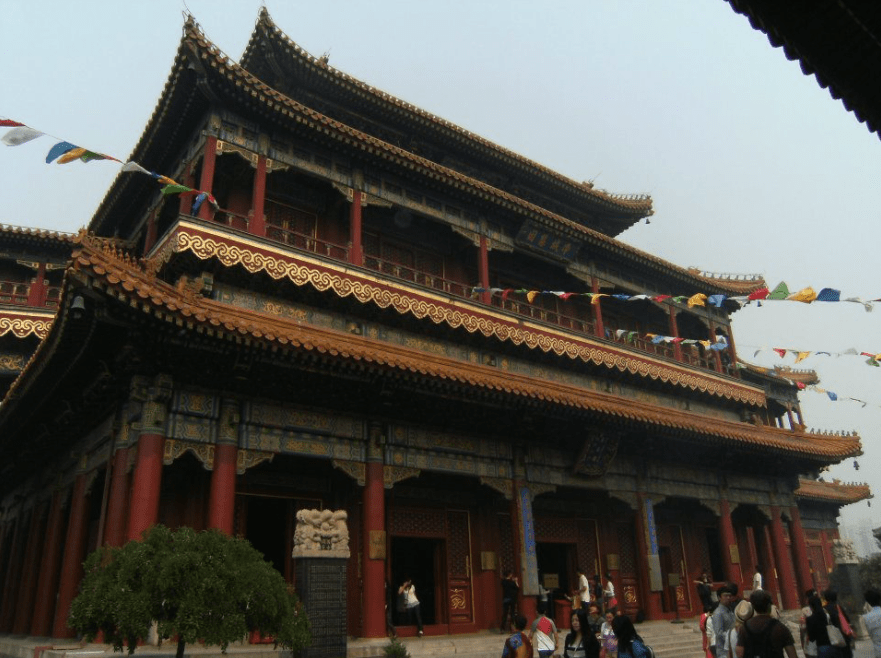
Spot of culture: The Yonghe Temple, also known as the Lama Temple (a lama is a Tibetan Buddhist monk and the temple is a working lamasery), is over 300 years old and lies – swathed in bright Tibetan prayer flags, billowing incense and sweeping eaves – in the Dongcheng district of Beijing, beside the Yonghegong subway station. One of the world’s most important Buddhist monasteries (and holder of that much-coveted accolade, Lonely Planet’s Top Temple in China), the Lama Temple was fortunate enough to have survived the Cultural Revolution relatively unscathed and is now lovingly cared for by the resident monks. Among its many highlights is the Maitreya Buddha statue, carved from one enormous piece of sandalwood (complete with somewhat incongruous Guinness Book of Records plaque) – though it’s the sense of incredible peace which settles over you as you emerge back onto the street, dizzy from smoke and colour, that really gives this temple the edge.
Dinner & Drinks
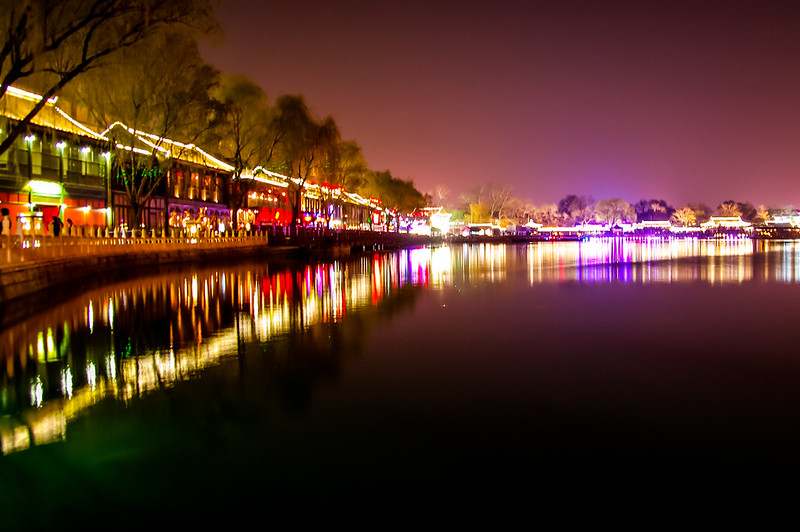
Houhai, one of the three lakes which make up the Shichahai scenic area in Beijing’s centre, is beautiful at any time of day, reflecting the soothing greens of willow trees and stark whites of marble bridges on its vast silver surface. But when darkness falls, the bar and restaurant-packed banks of Houhai Lake truly come into their own and, if it’s something special you’re after, this is the place to be.
Neon-swathed bars, restaurants, cafés and noodle joints jostle for the attention of a string of humanity, which surges – locals, tourists and expats – around the lake’s shore, nibbling candy floss and shouting over the tangled din of singers bellowing out Chinese hits to the accompaniment of heavily-amped guitarists. With a kaleidoscope of light spilling onto the black water and the air frenetic with sound, it’s is the perfect place to stroll, chat and bar hop until the wee small hours of the morning.
 Glug & Chew